
Cardiac assessment before anesthesia
SUJI Veterinary Cardiology Center, Yongin · Heart care for dogs & cats
Meet the veterinarian · Visit preparation · Test fees
You can have a separate pre-anesthetic cardiac assessment here even when surgery or dental scaling will be performed elsewhere. We review the history, examination and necessary tests to identify cardiovascular risks and issues to address. Findings are provided in a report for the treating hospital. Its anesthetist makes the final decision and plan after reviewing the patient's overall condition and the need for the procedure.
Before surgery at another hospital
You can arrange a separate pre-anesthetic cardiac assessment here even if surgery or dental scaling will take place at another hospital.
“My older pet needs dental scaling, but I am worried about anesthesia.”
We start with the history and examination, then assess the heart, kidneys and blood pressure when indicated to identify current risks and issues to address.
“My biggest concern before surgery is whether the heart is okay.”
This is a common concern before surgery. We select appropriate imaging and laboratory tests and explain the current condition and risk factors.
“I was told my pet has a heart murmur. Is anesthesia possible?”
We assess the cause of the murmur and cardiac function, then explain risks and monitoring considerations for the anesthetist's plan.
“My pet takes heart medication. I do not know whether surgery is possible.”
We evaluate the disease stage and medication response and outline whether additional monitoring may be needed during anesthesia.
“I want the procedure done at our usual hospital, with a separate assessment here.”
Yes. We provide the assessment report for your usual hospital.
“Surgery is soon. Can we arrange an assessment quickly?”
Call to discuss scheduling. We arrange an expedited assessment as soon as availability allows.

When to consider further cardiac assessment
These are risk factors that may prompt additional cardiac assessment before anesthesia. The actual need depends on the planned procedure, history and examination.
- Pets needing further assessment because of age, overall health or existing conditions before dental scaling or another procedure requiring anesthesia
- Patients previously found to have a heart murmur
- Patients receiving heart medication
- Brachycephalic breeds such as Bulldogs, Shih Tzus and Pekingese, or patients needing individual risk assessment because of body shape, concurrent disease or the planned procedure
- Cats with a murmur, gallop sound, arrhythmia, family history or breed predisposition to hypertrophic cardiomyopathy (HCM)
- A history of difficult recovery from anesthesia or sedation
- Chronic kidney or liver disease raising concerns about medication tolerance
- Long-standing breathing difficulties or coughing that may also involve changes in the lungs
What do we assess?
We first review the history, examination, planned procedure and previous results, then select clinically indicated tests. Blood tests, chest X-rays, Echocardiography, abdominal ultrasound, ECGare not performed as the same fixed set in every patient. Findings summarize the current condition and risk factors for the treating hospital's anesthetist to use in the final plan.
Concurrent disease / medication tolerance
IDEXX ProCyte One (CBC), Catalyst One (chemistry, electrolytes and T4), cardiac biomarkers and non-invasive blood pressure help assess kidney, liver, thyroid and blood pressure conditions. Abdominal ultrasound examines concurrent liver, kidney or adrenal disease that may affect anesthetic risk.
Lungs / chest imaging
Digital X-rays assess the lungs, changes in the cardiac silhouette and possible pulmonary edema.
Cardiac function / structure
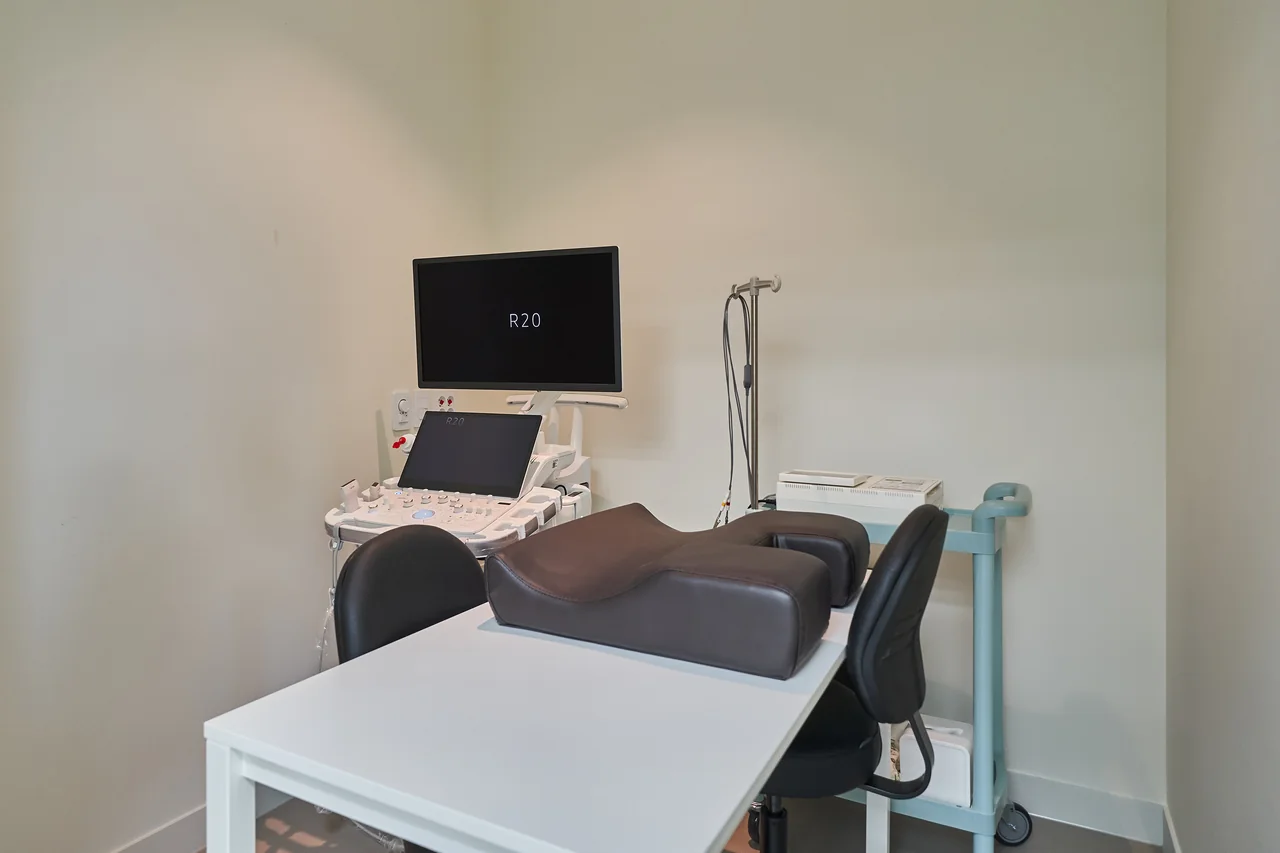
Samsung R20 echocardiography assesses left ventricular systolic function, valve leakage and atrial size.
Electrical activity / arrhythmias
ECG checks for evidence of arrhythmias that could pose a risk during anesthesia. A 24-hour Holter recording may be added when needed.
Findings for the treating hospital
After assessment, we provide the following two documents. Your usual hospital can use them when planning anesthesia.
Overall condition & risk factors
We summarize the patient's overall condition, cardiovascular disease and concurrent conditions at the time of testing. The treating hospital's anesthetist determines the ASA physical status classification and final anesthetic plan.
Anesthetic considerations report
We summarize medication and fluid considerations, monitoring such as blood pressure, oxygen saturation and ECG, and recovery observations based on cardiovascular status. The treating hospital selects the specific medications.
Imaging copies (optional)
Echocardiogram and X-ray copies can be provided on USB or through a cloud link for reference at another hospital.
Suggested follow-up
Follow-up timing is individualized, considering confirmed heart and concurrent disease, the planned procedure and the treating hospital's discharge plan.
The assessment process
The time required and when results are available depend on the tests selected, the patient's cooperation and any external laboratory testing.
Booking / scheduling
Providing the planned procedure date, age, existing conditions and medications in advance can help streamline scheduling.
History / examination / auscultation
It is helpful to bring the other hospital's procedure plan, test reports and prescription photos.
Cost estimate / consent
We explain estimated costs first and test with your consent. Items you do not consent to are not performed.
Tests selected for the patient
Based on the history and examination, we select the necessary ultrasound, X-rays, ECG, blood pressure and blood tests. If sedation may be needed, we explain its purpose and risks and obtain consent in advance.
Report / results discussion
The report describes current cardiovascular status, identified risks and considerations. It is a reference for the treating hospital's final anesthetic plan and is prepared in a format you can pass to your usual hospital.
FAQs
Can we have only the assessment here and the procedure at our usual hospital?
Is a same-day assessment possible?
We have results from another hospital.
What happens if risk factors are found?
How much does it cost?
Is fasting required?
Book a pre-anesthetic cardiac assessment
Tell us the planned procedure date at your usual hospital so we can coordinate the assessment.
Evidence & scope
Pre-anesthetic assessment begins with the history, medication, previous anesthesia experience and examination. The guidance below describes assessment and planning based on individual risks. Our cardiac findings support the treating hospital's final anesthetic plan.
Cardiac tests · Previous records & medication
Published by Suji Veterinary Cardiology Center · Meet the veterinarian
Page updated:
Planning heart care from southern Gyeonggi
The clinic is on the fourth floor of Suji Medipark, 65 Supung-ro, Suji-gu, Yongin. Regional guides cover the return journey, parking, previous records and medication details to bring.
Visitor guides for 21 cities & counties in southern Gyeonggi · Fees & applicable conditions · Hours & location