
Overview
Acquired heart disease involves changes in the valves or heart muscle over time and is common in older dogs and cats. The conditions most frequently seen differ between the species.
Myxomatous mitral valve disease (MMVD)
The most common heart disease in older small and medium-sized dogs. The valve between the left atrium and ventricle gradually thickens and allows blood to leak backward. Progression can lead to pulmonary edema, so regular monitoring matters.
MMVD describes degeneration of mitral valve tissue. When this prevents the valve from closing properly and blood flows backward, it causes mitral regurgitation. We assess valve changes, leakage and heart size together.
Dilated cardiomyopathy (DCM)
Seen mainly in large dogs, DCM involves ventricular dilation and thinning of the walls with reduced pumping function. Associations with some diets have been reported, so we also review feeding history.
Hypertrophic cardiomyopathy (HCM)
The most common feline heart disease, HCM involves thickening of the left ventricular wall and impaired relaxation. Early disease may have no obvious signs and may first be detected after sudden breathing difficulty or hindlimb paralysis from a clot.
Restrictive cardiomyopathy (RCM)
A feline condition in which the ventricles do not relax normally, impairing filling. Symptoms and imaging findings can overlap with HCM, making detailed imaging important for differentiation.

Our diagnostic approach
After reviewing history, examination, auscultation and previous records, we select relevant blood tests, chest X-rays, Echocardiography, abdominal ultrasound, ECG to answer the current clinical question. Not every patient receives the same tests in the same order. We explain the selected items and estimated costs and proceed with your agreement.
Auscultation / Respiratory rate
Assess murmur grade and resting respiratory rate (SRR).
Comprehensive blood tests / Cardiac biomarkers
CBC, serum chemistry, electrolytes, thyroid hormone (T4) and cardiac biomarkers (NT-proBNP and others) assess overall health and cardiac strain.
Digital X-rays
Assess cardiac silhouette size (VHS) and pulmonary edema.
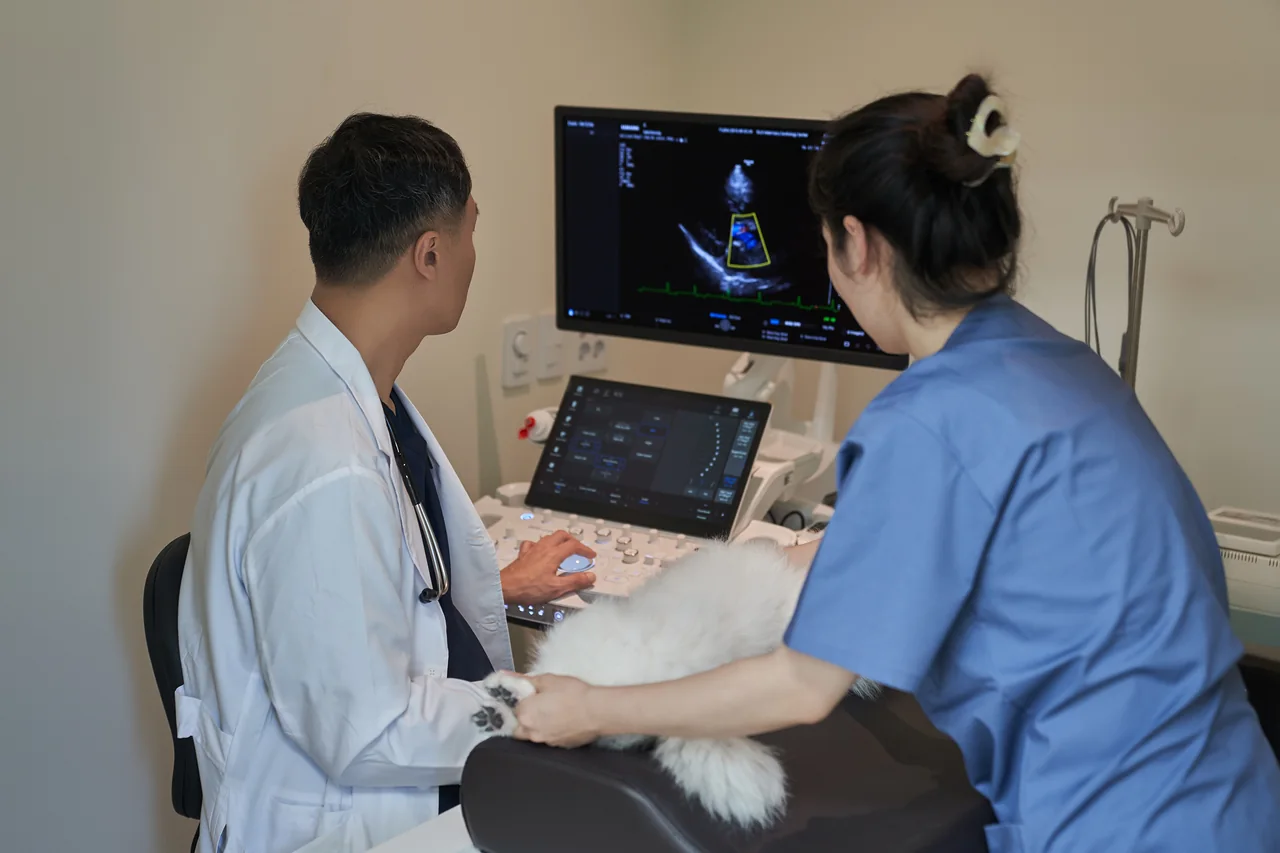
Echocardiography
Quantify valve and ventricular function with Doppler and determine the ACVIM stage.
abdominal ultrasound
Identify effects of reduced cardiac function, such as liver congestion or ascites, and concurrent kidney, liver or adrenal disease common in older pets. Findings directly inform medication choice and dosing.
Electrocardiography (ECG)
Assess rhythm and electrical activity when arrhythmias, unsteadiness or fainting are suspected.
Noninvasive blood pressure measurement and Holter monitoring for 24 hours or longer may be added when needed.
Treatment and management
Treatment varies by stage. We explain options based on ACVIM guidelines and the patient's current stage and condition.
Medication
Stage-appropriate combinations may include diuretics for pulmonary edema, vasodilators and inotropes. Doses are adjusted while monitoring kidney function and electrolytes.
Home monitoring — Resting respiratory rate (SRR)
Recording your pet's breathing rate during sleep can help detect early signs of pulmonary edema. We provide measurement guidance and a record sheet.
Diet / Daily routines
We advise whether sodium restriction is needed, suitable activity levels and medication timing, adapted to your pet and your daily routine.
Managing concurrent conditions
We monitor kidney and liver function during long-term cardiac medication and consider other chronic conditions common in older pets, including endocrine and musculoskeletal disease.
FAQs
Does a heart murmur always require medication?
Will medication be lifelong?
Does a cat without obvious symptoms need screening?
How do I measure resting respiratory rate?
What are the treatment costs?
Read more about each condition
Detailed clinical information on the main acquired heart conditions in this category.