Skip to content
Veterinary resources
KakaoTalk ↗031-8067-7527Hours & location

Cardiac care for dogs and cats in Suji, Yongin

Dr. Jinho Lee provides echocardiography, ECG and Holter monitoring, cardiac screening, and ongoing care for heart disease and related conditions in dogs and cats.

We explain the tests and follow-up suited to your pet's current condition.

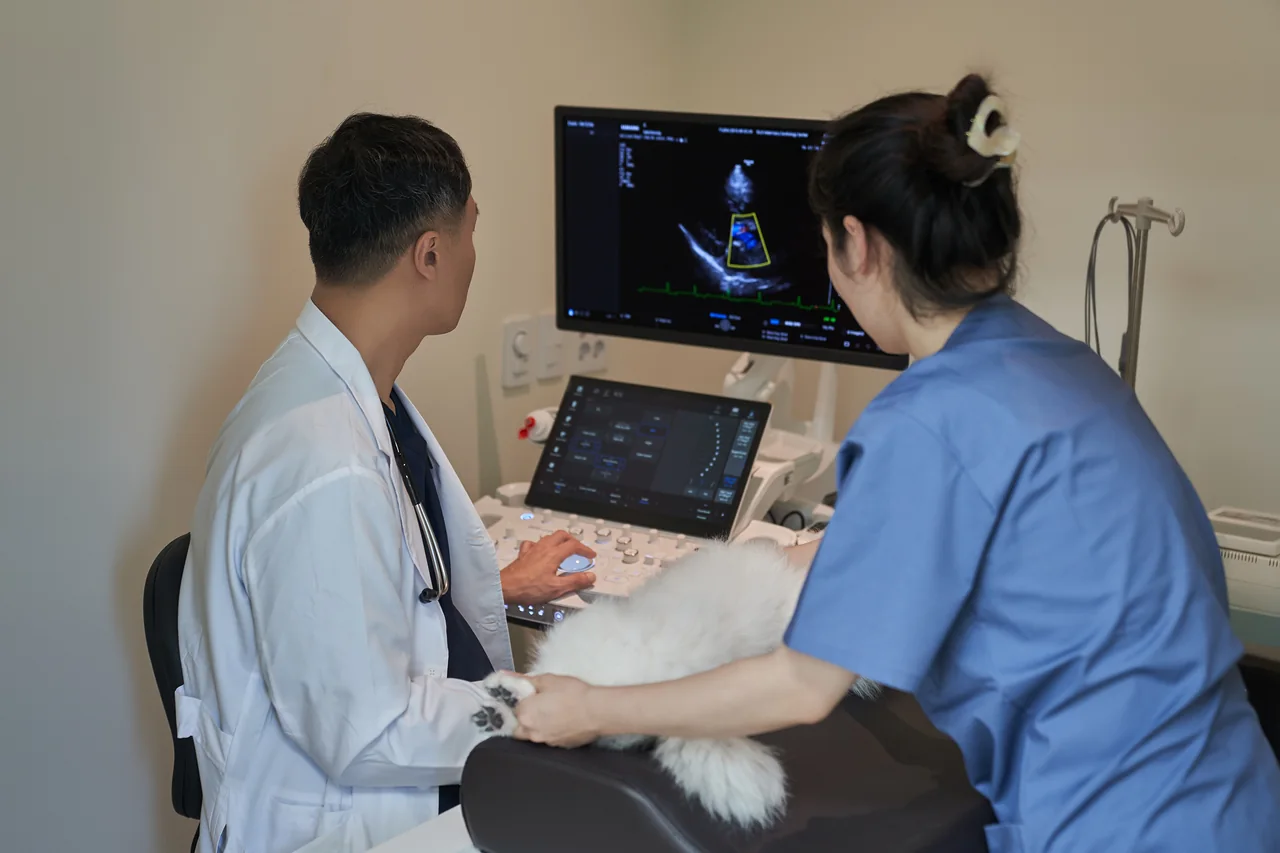
Dr. Lee Jinho performing heart ultrasound on a dog

Our approach to advanced heart failure and concurrent conditions

We review previous tests and prescriptions
alongside changes after treatment

If deterioration continues after a diagnosis elsewhere, or multiple conditions and prescriptions make treatment decisions difficult, please bring previous records. They help us understand how your pet's condition has changed.

We focus on medical assessment and management of advanced heart failure and concurrent cardiac, renal and endocrine disease in dogs and cats. Dr. Jinho Lee provides care directly, drawing on his internal medicine residency at Jeonbuk National University Animal Medical Center, director roles at Raum and Onbareun 24-hour animal medical centers, and postgraduate work in cardiorenal syndrome.

We explain current findings, the reasons for tests and medication changes, what to watch for at home and the follow-up plan. We outline tests and estimated costs first and proceed with the items you agree to.

Clinical experience and academic background ↗
  1. Treatment history

    Compare the initial diagnosis, recent deterioration and changes in test values and imaging.

  2. Current cardiac status

    Interpret history, auscultation and indicated echocardiography or ECG together.

  3. Concurrent conditions and all prescriptions

    Review kidney, endocrine and other conditions, outside prescriptions and responses to treatment.

  4. Monitoring and ongoing care

    Identify current priorities, checks after medication changes, observations to record at home and follow-up visits.

Prepare previous results and medication details · Fees · Visiting from southern Gyeonggi

If your pet has difficulty breathing, blue gums, fainting or sudden paralysis, go to the nearest 24-hour emergency veterinary hospital without waiting for an outpatient appointment or a reply.

What to look for in veterinary cardiac care

Alongside access to echocardiography, consider who interprets the results and explains how they relate to existing treatment. Explore our approach below.

The veterinarian responsible for testing and follow-up

Dr. Jinho Lee has 13 years of experience in university veterinary hospitals and 24-hour animal medical centers. With a master's degree focused on cardiorenal syndrome, he provides continuity from explaining test results through follow-up care.

Tests selected for the current condition

Echocardiography assesses structure and blood flow; ECG assesses rhythm. Holter monitoring may help investigate intermittent rhythm abnormalities. We review history and previous records before selecting tests for the current concern.

Review of treatment already started

If heart medication was prescribed elsewhere, we review previous images and reports alongside the response to changes. When kidney or endocrine disease and multiple prescriptions overlap, we discuss current priorities and follow-up.

Cardiac assessment for care at your regular clinic

We assess cardiovascular status before surgery or dental scaling and provide a report for the treating clinic. That clinic's veterinarian determines the final anesthetic plan and whether to proceed after reviewing overall health and the need for the procedure.

We provide outpatient care and daytime hospitalization with oxygen support. We explain tests and estimated costs, proceed with agreed items, and plan home observations and the next visit together.

We do not provide overnight hospitalization, surgery or 24-hour emergency care. Please confirm test preparation before your visit.

Cardiac tests

Tests guided by symptoms

These symptoms and situations may warrant cardiac assessment. Compare them with your pet's usual behavior.

  • Repeated coughing, especially at night or when excited
  • A resting respiratory rate of 40 or more breaths per minute
  • Reluctance to walk or tiring after little activity
  • Episodes of unsteadiness or loss of consciousness
  • A blue tongue or gums (cyanosis)
  • Being told that a heart murmur was heard during an examination

If your pet currently has difficult breathing, blue gums, reduced consciousness or repeated fainting, go straight to the nearest 24-hour emergency veterinary hospital. Do not wait for our phone, social-media or outpatient booking response.

We select the tests after reviewing the history

Medication choice and dosage also depend on organs outside the heart. A cough needs different assessment depending on whether it comes from the heart or lungs. Each test provides different information. The tests below are not routinely performed in every patient.

  1. Comprehensive blood testing + cardiac biomarkers

    “Can the other organs tolerate treatment?”

    Complete blood count(CBC), serum chemistry, electrolytes and thyroid hormone (T4) establish baseline kidney, liver and electrolyte status. Many cardiac medications involve the kidneys and liver, making these values important for safe drug and dose selection. Testing can also identify anemia or thyroid disease that may mimic cardiac symptoms. Cardiac biomarkers (NT-proBNPand cTnI) measure cardiac muscle strain and injury.

    What to check when canine NT-proBNP is high →

  2. Chest radiographs (X-rays)

    “Are these breathing symptoms coming from the heart or lungs?”

    We assess cardiac silhouette size (VHS) and lung findings. Advanced heart disease may cause pulmonary edema. Radiographs are selected when investigating coughing or breathing difficulty, or when lung assessment is needed.

  3. Echocardiography

    “What is happening inside the heart?”

    Real-time ultrasound evaluates valve leakage, chamber size and heart muscle contraction. These findings inform disease staging and treatment alongside other clinical information. Dr. Lee, who completed a veterinary internal medicine residency focused on cardiology, interprets Samsung R20 images and measurements together with examination and other test findings.

  4. abdominal ultrasound

    “Has heart disease affected the body? Could another condition be present?”

    Reduced cardiac function can cause liver congestion or abdominal fluid accumulation. Older pets also commonly have kidney, liver or adrenal disease that directly affects heart medication choices. We assess the whole body in context.

  5. Electrocardiography (ECG)

    “Is the heartbeat regular?”

    While ultrasound examines heart structure, ECGexamines electrical activity. ECG is selected for suspected arrhythmias, unsteadiness or fainting. If a short recording misses the episode, we may consider Holter monitoring for 24 hours to 14 days.

We first review history, examination, auscultation and previous records, then select tests for the current symptoms and purpose of the visit. We explain the items and estimated costs and proceed with your agreement. This is general information; individual diagnosis and treatment are determined with your veterinarian.

Your care pathway

Care pathway — Assessment / Treatment plan / Follow-up

  1. Thorough assessment

    Based on history, auscultation and previous records, we select relevant blood tests, chest X-rays, Echocardiography, abdominal ultrasoundand ECG. Holter monitoring may be considered for suspected intermittent arrhythmias.

  2. Safe treatment

    We apply stage-appropriate treatment protocols supported by international guidelines, including ACVIM guidance.

  3. Lifelong care

    Regular monitoring and owner education support your pet's stability in everyday life over the long term.

Planning your visit from Yongin and nearby areas

Plan travel and test appointments together

For echocardiography or Holter monitoring, bring previous reports, images and medication details. If considering a Holter, ask about fitting and return visits and how results will be explained.

Travel and location guidance for southern Gyeonggi · Preparing previous results, medication details and test appointments

Cardiac testing in Suji, Yongin

Before booking echocardiography

How do echocardiography and ECG differ?

Echocardiography assesses valves, chambers and blood flow; ECG assesses electrical signals and rhythm. Actual Samsung R20 examination images and equipment information are available in our equipment guide. For fainting or intermittent rhythm changes, also see our ECG and Holter guide.

What should I bring to a first visit?

Bring previous results, prescriptions and the names, doses and timing of current medications. Videos and timestamps of coughing or unsteadiness can help when symptoms are difficult to reproduce in the clinic. For food and medication preparation, see our first visit guide.

How are results used at follow-up visits?

We compare images and measurements with previous results, symptoms and medication records to assess progress. Read about interpreting results in canine valve disease and feline cardiomyopathy. You can discuss results and home observations with Dr. Jinho Lee, who completed a veterinary internal medicine residency focused on cardiology.

Naver blog guide with actual examination images (opens in a new window) · Hours & directions

Call us first

For stable, non-emergency concerns, describe the symptoms and we can explain possible tests and an approximate cost range. For acute breathing difficulty, blue gums, reduced consciousness or repeated fainting, go to a 24-hour emergency veterinary hospital without waiting for a phone consultation.

Planning heart care from southern Gyeonggi

The clinic is on the fourth floor of Suji Medipark, 65 Supung-ro, Suji-gu, Yongin. Regional guides cover the return journey, parking, previous records and medication details to bring.

Visitor guides for 21 cities & counties in southern Gyeonggi · Fees & applicable conditions · Hours & location